
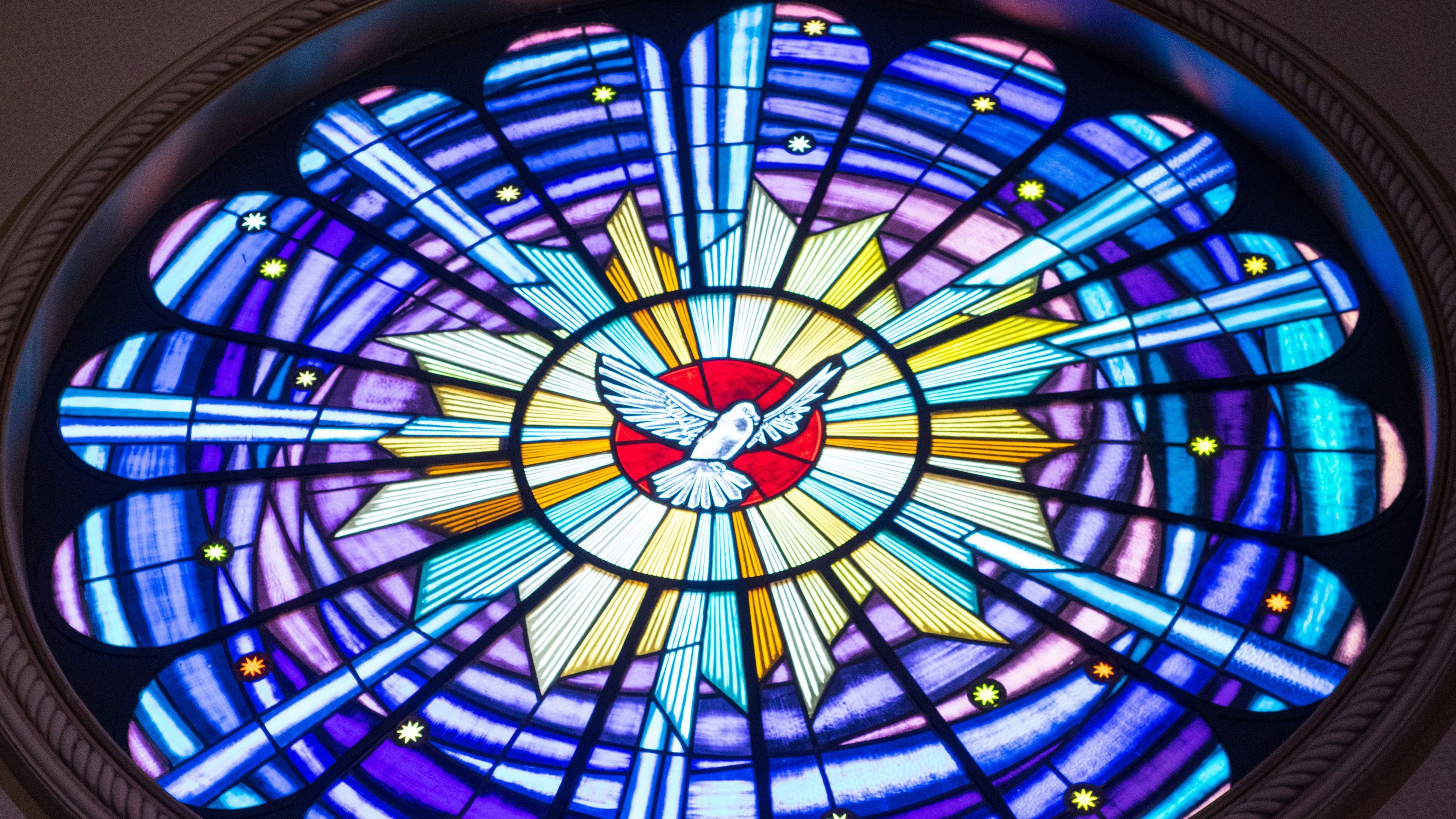
The Spirit Helps Us Live the Ordinary
After the fire of Pentecost, the Church puts on green and settles in for the long stretch. The Spirit doesn't take the green season off.
The fires of Pentecost don't go out. They spread.
After the Solemnity of Pentecost, the Church puts away the red and brings out the green. Ordinary Time returns. The dramatic feasts are behind us, and the long stretch of weeks ahead can feel uneventful by comparison.
But the Holy Spirit doesn't take the green season off.
A New Kind of Presence
Before he ascended, Christ told his disciples something they didn't yet understand: "I will not leave you orphans" (John 14:18). The Spirit, he said, would come. And the Spirit would not be a substitute for him. The Spirit would be the way he stayed.
The Greek word the Gospels use is paráklētos. We translate it as "advocate" or "comforter," but the literal meaning is "one called alongside." The Spirit walks with us. Not above. Not behind. Beside.
This is the gift of Pentecost, and it doesn't expire when the candles go out.
Seven Gifts and Slow Fruit
At Confirmation, the Church names seven gifts of the Holy Spirit, drawn from the prophet Isaiah: wisdom, understanding, counsel, fortitude, knowledge, piety, and fear of the Lord (Isaiah 11:1-2). These aren't bonuses for the spiritually advanced. They are the standard equipment for the baptized.
Wisdom helps us see things as God sees them. Counsel helps us choose. Fortitude helps us stand. Knowledge and understanding help us interpret Scripture and our own lives. Piety draws us toward worship. Fear of the Lord, properly understood, is awe: the recognition of who God is and who we are before him.
St. Paul names another set: the fruits of the Spirit. "Love, joy, peace, patience, kindness, goodness, faithfulness, gentleness, self-control" (Galatians 5:22-23). The metaphor is exact. Fruit takes time. You don't manufacture it; you grow it. And you grow it in the long, green stretches when nothing dramatic is happening.
This is the Spirit's patient work. He shapes us through ordinary days, ordinary choices, ordinary disciplines. The fruits ripen slowly. Most of the changing happens in seasons no one celebrates.
The Monastic Heart in Active Life
Fr. Kennell often speaks of the "monastic heart," a way of inhabiting daily life that's recollected, attentive, oriented toward God even in the middle of normal work. We aren't monks. We have jobs and children and bills. But the monastic disposition isn't reserved for those in the cloister. It's what the Spirit cultivates in anyone who lets him.
The Benedictines have an ancient phrase: ora et labora, pray and work. The genius of the formula is that it doesn't separate the two. Prayer doesn't compete with work. They flow into each other when the Spirit is allowed to shape both.
A spiritual plan of life can help. So can the simple practice of pausing for the Angelus at noon, or whispering "Come, Holy Spirit" before a difficult conversation, or examining the day before sleep. None of this is heroic. It's just attention. And attention is exactly what the Spirit is teaching.
Every Mass, Another Pentecost
At every Mass, just before the Consecration, the priest extends his hands over the bread and wine and asks the Father to send the Holy Spirit upon the gifts. This prayer is called the epiclesis, from the Greek for "calling down."
In the Roman Canon, the petition is stately: "Be pleased, O God, we pray, to bless, acknowledge, and approve this offering in every respect; make it spiritual and acceptable." In other Eucharistic Prayers, it's even plainer: "Send down your Spirit like the dewfall."
The Spirit who descended on the apostles in tongues of fire is the same Spirit invoked over the altar at every Mass. Pentecost is not finished. It's repeated, week by week, anywhere the Eucharist is celebrated. We participate in that first outpouring every time we say "Amen" to the Body of Christ.
The Eucharist is the source and summit of the Christian life. It is also where the Spirit keeps doing his work in us, quietly, again and again, until the green seasons of our lives bear the fruit he intends.
Come, Holy Spirit
The Church has prayed the same prayer for nearly nine hundred years. The hymn is called Veni Sancte Spiritus. The first line, in English, is the one most of us learned as children:
Come, Holy Spirit, fill the hearts of your faithful, and kindle in them the fire of your love.
It's a short prayer. But it's worth praying daily, especially in Ordinary Time, when the calendar offers nothing especially urgent. The Spirit is there. He's waiting to be asked. He waits to teach us how to live what we've already been given.
The fire of Pentecost is still burning. It just looks like ordinary life now.