
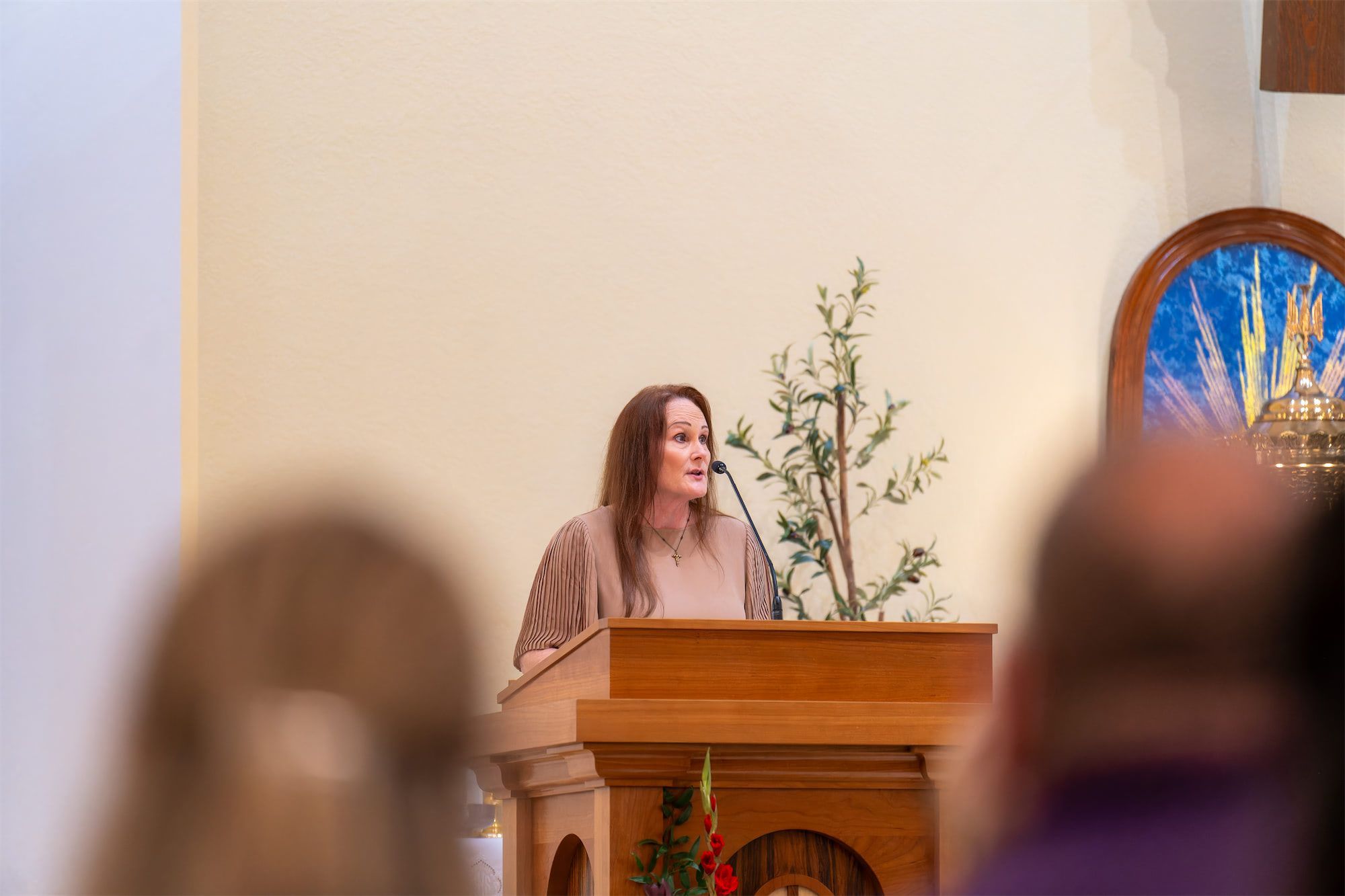
Lectors
When Scripture is proclaimed at Mass, God himself speaks to his people. Lectors lend their voice to that moment.
Every Mass has two tables: the table of the Word and the table of the Eucharist. We often focus on the altar, where bread and wine become the Body and Blood of Christ. But the ambo, the lectern where Scripture is proclaimed, is just as sacred. The Word of God is not merely read there. It is made present.
The Church teaches this plainly: "When the Sacred Scriptures are read in the Church, God himself speaks to his people, and Christ, present in his word, proclaims the Gospel." That's from the General Instruction of the Roman Missal. It's not metaphor. When the lector opens the Lectionary and begins to read, something happens. God speaks.
This is what lectors do. They lend their voice to that moment.
More Than Reading
Anyone can read aloud. But proclaiming the Word of God is different. The lector isn't performing or presenting information. They're serving as an instrument, making space for an encounter between God and his people.
This requires preparation. Not just glancing at the readings Saturday night, but sitting with them during the week. Understanding the context. Praying over the words. Letting the passage sink in so that when you stand at the ambo, you're not just pronouncing syllables, you're communicating something you've received.
It also requires craft. Clear pronunciation. Deliberate pacing. Knowing where to pause, where to let a phrase land. The goal isn't to sound impressive. The goal is to get out of the way, so the Word can do its work.
The Hidden Work
Most of what a lector does happens before Sunday. The best lectors read the passage out loud multiple times during the week. They look up unfamiliar names and places. They consider what the reading meant to its original audience and what it means in the context of the liturgical season.
This isn't busywork. It's formation. Lectors often find that preparing the readings week after week reshapes their own faith. You can't spend that much time with Scripture and remain unchanged.
A Word About Nerves
Many people feel called to this ministry but hold back because they're nervous. Public speaking is hard. The idea of standing in front of the whole parish and reading sacred text can feel overwhelming.
But here's the thing: the nerves usually mean you understand what's at stake. You're taking it seriously. That's good.
The Church doesn't need polished performers at the ambo. She needs people who reverence the Word and are willing to serve. The rest (the skill, the confidence) comes with practice. And the community is more forgiving than you think. They want you to succeed. They're not critics; they're your brothers and sisters, waiting to hear God speak.
Serving at the Ambo
Lectors typically proclaim the First Reading (usually from the Old Testament) and the Second Reading (from the New Testament letters). The Gospel is reserved for the deacon or priest. In some parishes, lectors also announce the intentions during the Prayer of the Faithful.
It's a rhythm: you prepare during the week, arrive early on Sunday, settle yourself in prayer, and then, when the moment comes, you walk to the ambo, open the book, and speak on behalf of God to his people.
There are few ministries more humbling. And few more necessary.
An Invitation
If you've ever felt drawn to this ministry, don't let fear hold you back. Training is provided. You won't be thrown into the deep end alone. And the preparation itself, the weekly encounter with Scripture, will bear fruit in your own spiritual life.
The Word of God is living and active. It wants to be heard. And the Church needs men and women willing to proclaim it.
If you're interested, reach out to the parish office. We'd be glad to help you get started.