
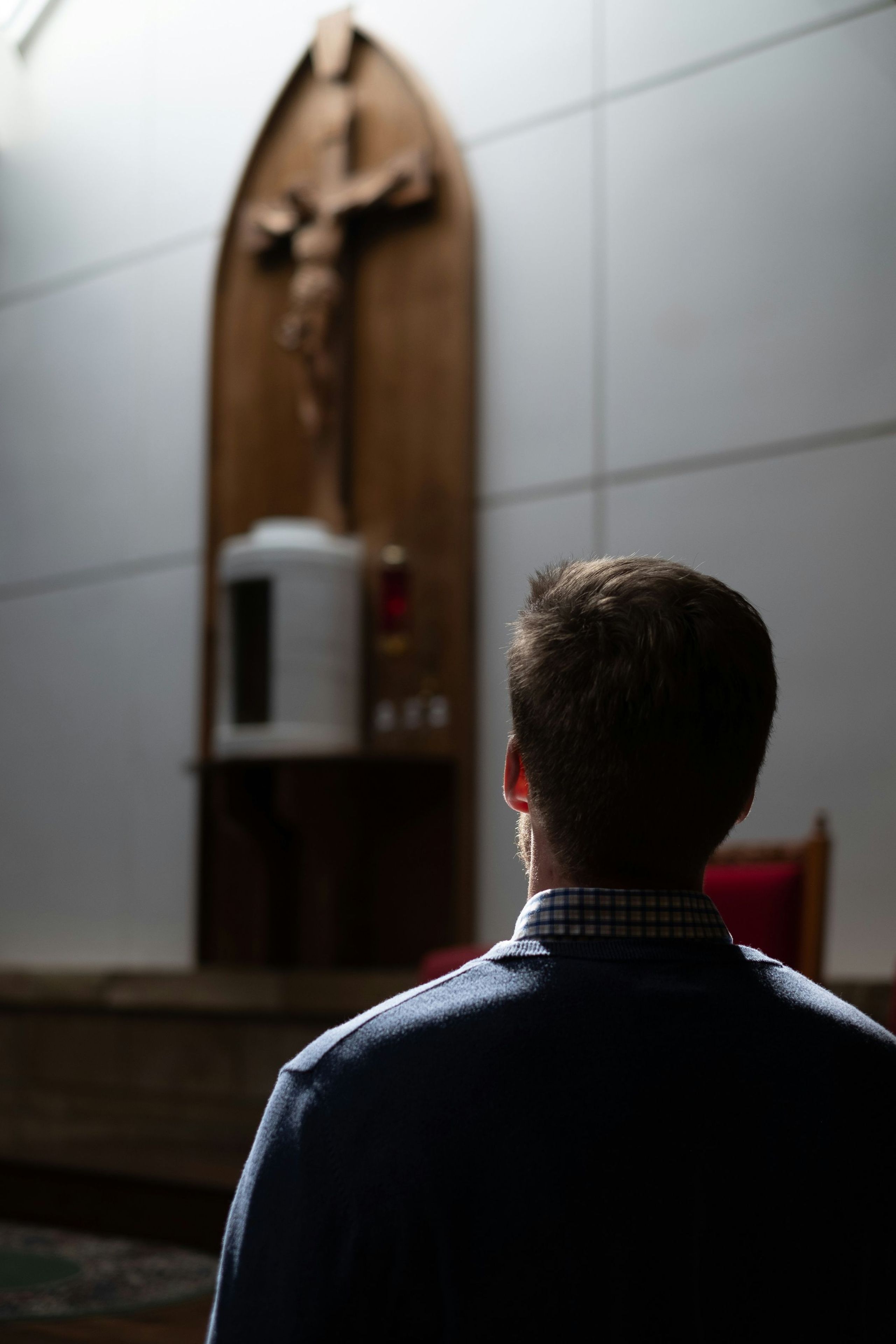
Discipleship
The word means "student." But following Jesus is more than learning ideas, it's learning a way of life, from a person, over time.
The word "disciple" comes from the Latin discipulus, a learner, a student. In the ancient world, to be a disciple meant attaching yourself to a teacher, not just to absorb information but to learn a way of life. You followed your master. You watched how he lived. You imitated him until his way became your way.
This is what Jesus invited when he said, "Follow me."
The Ones He Called
Look at who Jesus chose.
Not scholars. Not priests. Not the religiously credentialed. He walked along the Sea of Galilee and called fishermen: Peter, Andrew, James, John. He saw a tax collector at his booth and said, "Follow me," and Matthew got up and left everything (Matthew 9:9).
These were not people with obvious qualifications. They were workers. Some were socially suspect. None of them would have been first picks for a religious movement.
But Jesus wasn't looking for experts. He was looking for people willing to follow.
What Following Looked Like
To follow Jesus meant leaving things behind.
The disciples left their nets, their boats, their families, their livelihoods. They didn't know where they were going. They didn't have a syllabus. They just walked with him, through villages, along roads, into synagogues and homes and hillsides.
They watched him heal. They listened to him teach. They saw how he treated the poor, the sick, the outcast. They noticed how he prayed, slipping away before dawn to be alone with the Father.
And they asked questions. Constantly. "Lord, teach us to pray" (Luke 11:1). "Who is the greatest in the kingdom?" (Matthew 18:1). "Why could we not cast it out?" (Mark 9:28). Sometimes the questions were good. Sometimes they revealed how little they understood.
Jesus was patient with them. He explained things privately when they didn't understand. He corrected them when they were wrong. He sent them out to practice what they'd seen, and debriefed them when they returned.
This is discipleship: not a classroom, but a road. Not a curriculum, but a relationship.
Getting It Wrong
The disciples were not quick studies.
Peter confessed Jesus as the Messiah, and then, moments later, tried to talk him out of the cross and was rebuked: "Get behind me, Satan" (Matthew 16:23). James and John asked to sit at his right and left hand in glory, completely missing the point (Mark 10:35-40). All of them fell asleep in Gethsemane when he asked them to watch and pray. All of them fled when he was arrested.
Peter denied him three times.
And yet. These are the ones Jesus built his Church on. These slow learners, these failures, these men who ran away, they became apostles and martyrs. After the Resurrection, after Pentecost, they were transformed.
That's the hope for the rest of us. Discipleship doesn't require getting it right from the start. It requires staying with the Teacher long enough to be changed.
A School of Prayer
We speak of our parish as a "School of Prayer." The phrase captures something important about what discipleship looks like now.
We no longer walk dusty roads with Jesus in the flesh. But we still follow him. We still learn from him. And the Church gives us the means to do it.
The liturgy is where we encounter him most directly, in the Word proclaimed, in the Eucharist received. The liturgical year walks us through his life: his birth, his ministry, his passion, his resurrection, his sending of the Spirit. Year after year, we cover the same ground, and year after year, we see things we missed before.
Prayer is how the relationship deepens. Not just formal prayers, though those matter, but the habit of turning toward him throughout the day. Asking for help. Giving thanks. Sitting in silence. Letting him speak.
The sacraments are how he forms us. Baptism plunges us into his death and resurrection. Confession restores us when we fall. The Eucharist feeds us with his own life. These are not rituals to check off. They are encounters with the living Christ.
Discipleship, in other words, is not a program you complete. It's a way of life you grow into, slowly, over years.
The Cost
Jesus never hid the cost.
"Whoever wishes to come after me must deny himself, take up his cross, and follow me" (Mark 8:34). "Foxes have dens and birds of the sky have nests, but the Son of Man has nowhere to rest his head" (Matthew 8:20). "No one who sets a hand to the plow and looks back is fit for the kingdom of God" (Luke 9:62).
Following him will cost you something. Maybe comfort. Maybe reputation. Maybe relationships. Maybe habits you've grown attached to. Maybe plans you had for your life.
The question is not whether discipleship is hard. It is. The question is whether Jesus is worth it.
The first disciples decided he was. They left everything. And when they faltered, when Peter sank in the water, when Thomas doubted, when all of them ran, Jesus didn't give up on them. He restored them. He sent them out again.
He does the same for us.
Following Now
So what does it look like to be a disciple today?
It looks like showing up. Coming to Mass not out of obligation but out of desire to be with him. Making time for prayer even when life is crowded. Reading Scripture not for information but for formation, letting his words work on you.
It looks like obedience. Not just believing the right things but doing what he said. Forgiving the person who wronged you. Giving to those in need. Telling the truth when it's costly. Loving your enemies.
It looks like community. The disciples followed together. They learned from each other. They held each other accountable. You cannot be a disciple alone. You need the Church, the parish, the sacraments, the fellowship of other believers who are also stumbling along the road.
And it looks like mission. Jesus didn't call disciples just so they could feel close to him. He called them to be sent. "Go and make disciples of all nations" (Matthew 28:19). The learner becomes a teacher. The follower becomes a witness.
The Invitation Stands
Two thousand years later, the invitation is the same.
Follow me.
Not "understand everything first." Not "get your life together and then come." Just: follow. Start walking. Stay close. Watch and listen. Let him teach you.
You'll get things wrong. You'll have questions you can't answer. You'll stumble and fall and wonder if you're making any progress at all.
That's fine. So did Peter. So did all of them.
The only thing required is to keep following.